Care guide
Monstera
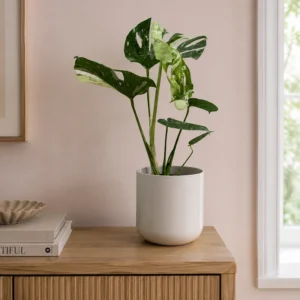
Monstera deliciosa / Monstera adansonii
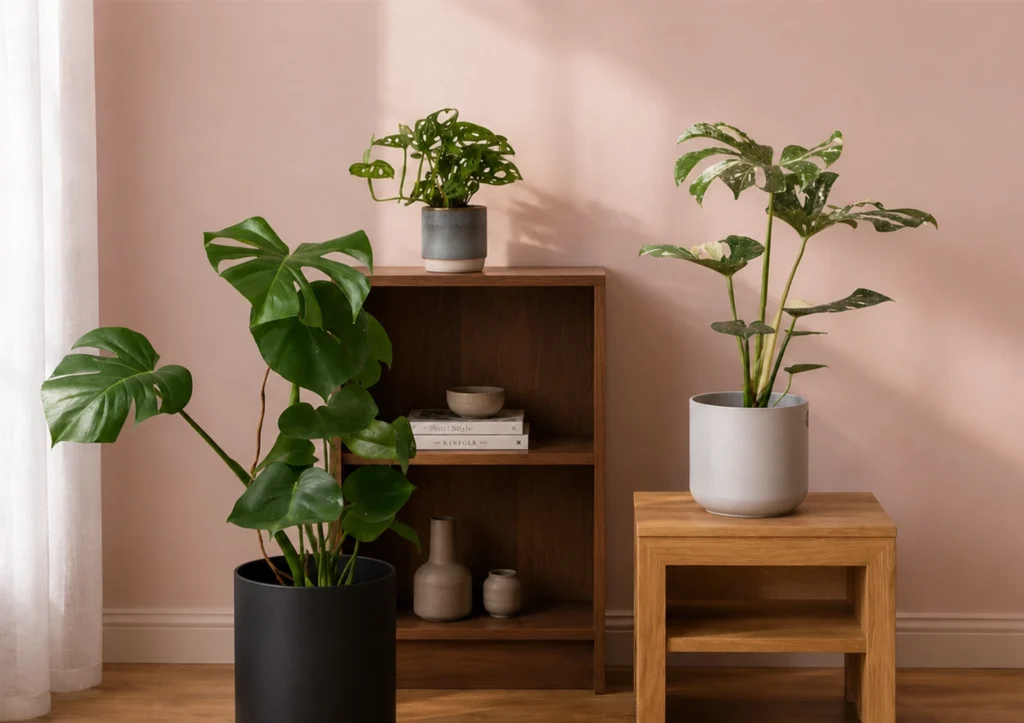
Easy-going rainforest climbers. Give them bright light, a stick to check the soil with, and something to climb — they do the rest. This guide covers commonly grown Monsteras, especially Monstera deliciosa (including Thai Constellation) and Monstera adansonii (Monkey Mask).
At a glance
tap for detail ↓Just arrived?
Welcome home! A little settling-in is completely normal — here’s what to know in week one.
- Drooping or leaf drop can have several causes. Check the compost, drainage and growing conditions rather than assuming it is only travel stress.
- Keep a healthy plant in its nursery pot while it settles. If it keeps wilting, the compost stays waterlogged or roots look damaged, check the cause rather than waiting a fixed number of weeks.
- Follow the watering advice for this plant below. Check the compost first and let excess water drain before returning the nursery pot to its cover.
Light
Monsteras grow beneath the rainforest canopy, so they want plenty of light without harsh direct sun. A spot near an east- or west-facing window is ideal. Too little light and new leaves stay small and solid; strong midday sun through glass can scorch them.
Watering
Check the soil before you reach for the watering can. When the top few centimetres are dry, water thoroughly and let the excess drain away — never leave it sitting in water. Expect roughly weekly in summer, closer to fortnightly in winter.
The dipstick check
Slide a wooden stick or skewer a few centimetres into the soil.
Pull it out and look: damp soil clinging on means hold off.
Use the watering advice for this plant to decide whether it is ready for a drink. When you water, let the excess drain.
Humidity & temperature
Average room humidity is fine, though your Monstera will reward you for more — group it with other plants or sit it in the kitchen or bathroom. Keep it between 18–27°C and away from radiators and cold draughts; below about 13°C growth stalls.
Feeding
Feed monthly through the growing season, April to September, with a balanced houseplant feed at the recommended dilution. Hold off entirely over winter — the plant is resting and unused feed builds up in the compost.
Repotting & size
Leave it in its nursery pot inside the decorative cover until roots circle the base or poke from the drainage holes — usually every two to three years. Step up one pot size into a chunky, free-draining peat-free mix, and give it a moss pole to climb if you want the big fenestrated leaves.
Something wrong?
Most problems are fixable — find the symptom below.
Yellowing lower leaves
Cause
Usually overwatering — soil staying wet between waterings.
Fix
Let the top few centimetres dry out before watering again and check the pot drains freely. One old leaf yellowing occasionally is normal.
Brown, crispy leaf edges
Cause
Dry air or underwatering.
Fix
Check the soil more often in warm weather and raise humidity — group plants together or move it somewhere steamier.
No holes in new leaves
Cause
Not enough light, or the plant is still young.
Fix
Move it somewhere brighter (no harsh direct sun) and give it something to climb — fenestrations come with maturity and light.
Drooping all over
Cause
Either extreme — bone dry or waterlogged.
Fix
Feel the soil. Dry: water thoroughly and let it drain. Wet: hold off watering and let it dry out; check the roots if it doesn't perk up.
Black, soft stem bases
Cause
Root or stem rot from persistent overwatering.
Fix
Act fast — remove from the pot, trim any brown mushy roots, and repot into fresh, barely damp mix. Water sparingly while it recovers.
Long stems, small leaves
Cause
Reaching for light.
Fix
Move it closer to a window and rotate the pot a quarter-turn each week so it grows evenly.
Leaves curling
Cause
Usually thirst, very dry air, excess heat, cold shock or root stress.
Fix
Check the compost before watering. Move it away from radiators or cold glass; water thoroughly only if the root ball is genuinely dry, and inspect the roots if the soil remains wet.
Meet the plant
Swiss Cheese Plant
- M. deliciosa gets its name from its fruit, but it is edible only when fully ripe; unripe fruit can irritate. Monkey Mask (M. adansonii) is a different species in the same genus.
- The holes aren’t just for show: fenestrations are thought to help Monsteras cope with rainforest life — letting wind and heavy rain through, and light reach lower leaves — though the exact function is still debated.
- Like many aroids, Monstera leaves are toxic to cats and dogs if chewed — best kept out of reach of curious pets.
Shop this plant
Seasonal care tips, four times a year
What to change as the light changes — no spam, ever.
The sign-up form is not available right now. Browse our care guides for plant advice without signing up.