Care guide
Bird of Paradise
Strelitzia nicolai / Strelitzia reginae
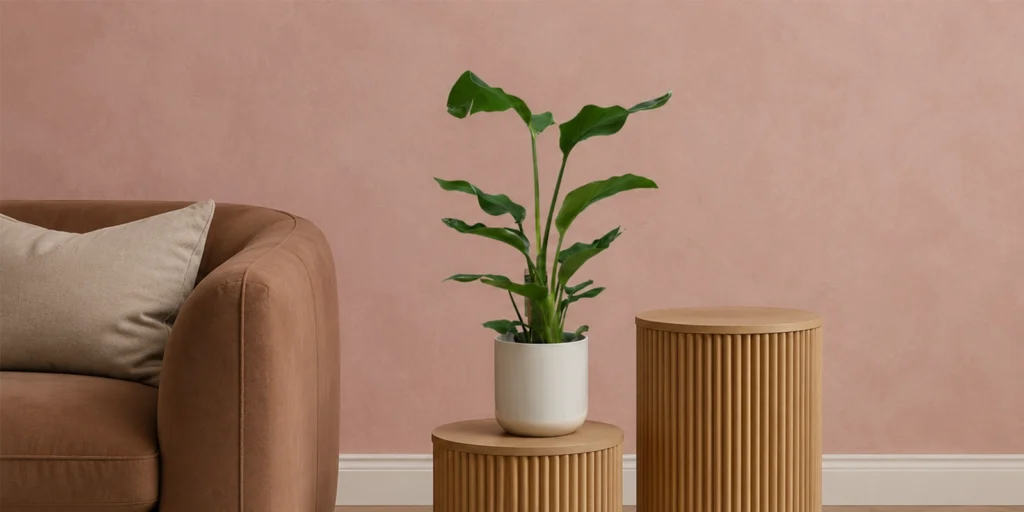
Bold paddle leaves and unmistakably tropical growth. This guide covers the two bird-of-paradise plants most often grown indoors: the towering white bird of paradise, Strelitzia nicolai, and the smaller orange-flowering Strelitzia reginae.
At a glance
tap for detail ↓Just arrived?
Welcome home! A little settling-in is completely normal — here’s what to know in week one.
- Drooping or leaf drop can have several causes. Check the compost, drainage and growing conditions rather than assuming it is only travel stress.
- Keep a healthy plant in its nursery pot while it settles. If it keeps wilting, the compost stays waterlogged or roots look damaged, check the cause rather than waiting a fixed number of weeks.
- Follow the watering advice for this plant below. Check the compost first and let excess water drain before returning the nursery pot to its cover.
Light
Both commonly grown Strelitzias want one of the brightest positions in the house and can take several hours of direct sun once acclimatised. Low light slows new leaves and makes indoor flowering much less likely.
Watering
Check weekly in summer — a large Strelitzia in active growth can drink quickly. Water thoroughly when the top few centimetres are dry and let the excess drain. Ease off in winter when growth slows, especially with cooler temperatures.
The dipstick check
Slide a wooden stick or skewer a few centimetres into the soil.
Pull it out and look: damp soil clinging on means hold off.
Use the watering advice for this plant to decide whether it is ready for a drink. When you water, let the excess drain.
Humidity & temperature
Average humidity is acceptable; higher is better and stops leaf edges browning. Keep it above 15°C — it’s tougher than it looks but hates cold, wet feet.
Feeding
Feed monthly through the growing season with a balanced houseplant food — those enormous leaves are expensive to build. Rest it over winter.
Repotting & size
Young plants may need potting up each spring; older plants can stay snug for longer. Use a sturdy pot and rich, free-draining peat-free mix. Strelitzia nicolai becomes much larger and heavier than S. reginae, while split leaves are natural in both and are not a reason to repot.
Something wrong?
Most problems are fixable — find the symptom below.
Leaves splitting along the veins
Cause
Completely natural — in the wild, splits let storm winds pass through.
Fix
Nothing to fix. Keep humidity up and handle leaves gently to minimise it, but a split leaf is a healthy leaf.
New leaf stuck, not unfurling
Cause
Low humidity or underwatering while the leaf develops.
Fix
Keep watering consistent, raise ambient humidity and gently rinse or wipe the rolled leaf with lukewarm water. Do not pull it open.
Brown, crispy edges
Cause
Dry air or inconsistent watering.
Fix
More regular soil checks and a more humid position.
Yellowing leaves
Cause
Overwatering, especially in winter.
Fix
Let it dry out properly between drinks in the darker months.
Leaning to one side
Cause
Growing towards the light.
Fix
Rotate the pot a quarter-turn each week.
No new leaves
Cause
Not enough light or winter rest.
Fix
Normal November to February. In season, it needs a sunnier spot to push new growth.
Meet the plant
Strelitzia
- Strelitzia reginae can flower indoors when mature and given abundant light; S. nicolai is much less likely to bloom inside and is usually grown for its enormous leaves. Both are toxic to cats and dogs if eaten.
- The two species grow on very different scales: S. reginae is the smaller clumping plant, while S. nicolai can reach 6–10 metres outdoors and often grows until an indoor ceiling stops it.
- The genus Strelitzia honours Queen Charlotte of Mecklenburg-Strelitz; the species name nicolai commemorates Grand Duke Nikolai Nikolaievich.
Shop this plant
Seasonal care tips, four times a year
What to change as the light changes — no spam, ever.
The sign-up form is not available right now. Browse our care guides for plant advice without signing up.