Care guide
Anthurium
Anthurium Andraeanum Group
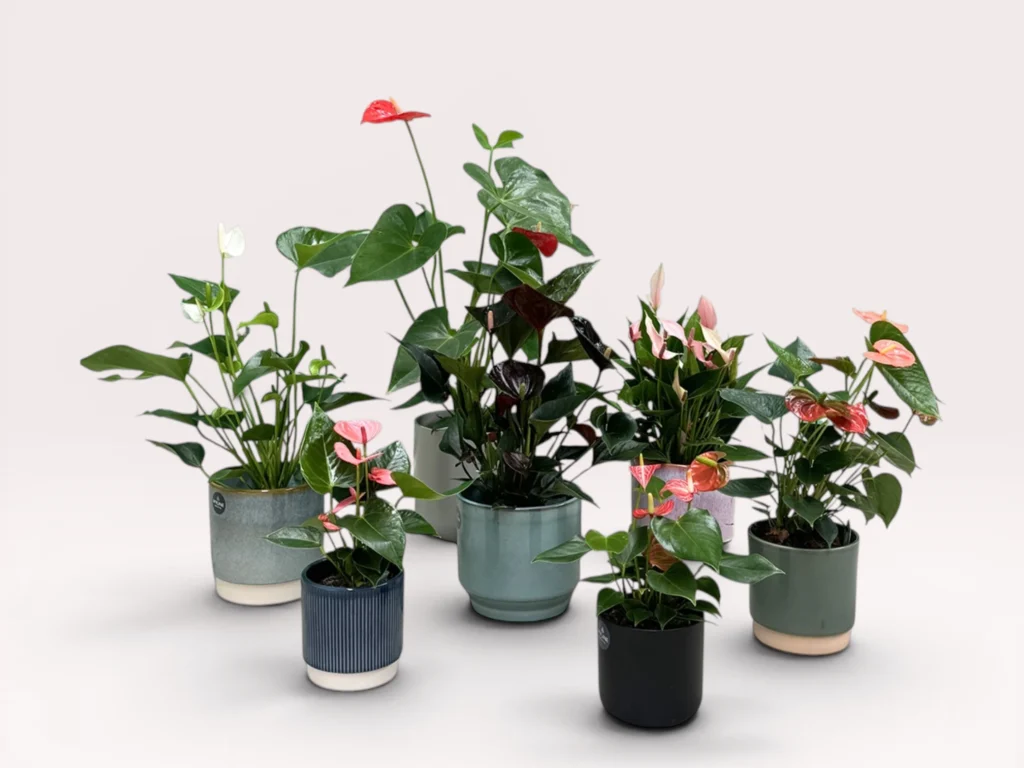
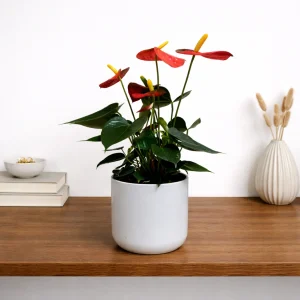
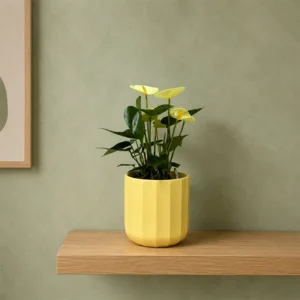
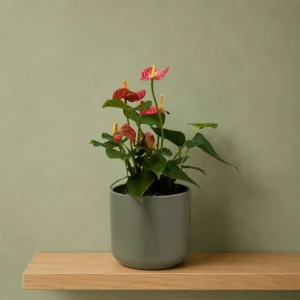
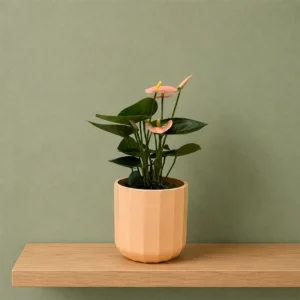
Glossy heart-shaped leaves and lacquered blooms that last for months, not days — an easy way to keep colour in the house all year. This guide covers the flowering Anthurium Andraeanum Group sold as Flamingo Flowers, not the specialist foliage anthuriums.
At a glance
tap for detail ↓Just arrived?
Welcome home! A little settling-in is completely normal — here’s what to know in week one.
- Drooping or leaf drop can have several causes. Check the compost, drainage and growing conditions rather than assuming it is only travel stress.
- Keep a healthy plant in its nursery pot while it settles. If it keeps wilting, the compost stays waterlogged or roots look damaged, check the cause rather than waiting a fixed number of weeks.
- Follow the watering advice for this plant below. Check the compost first and let excess water drain before returning the nursery pot to its cover.
Light
Bright, indirect light keeps the flowers coming — near an east window or a little back from a brighter one. It will live in shadier spots but gradually stops blooming; direct summer sun scorches the leaves.
Watering
Check weekly and water when the top few centimetres are dry, letting it drain fully — anthurium roots hate sitting wet. It would rather run slightly dry than soggy.
The dipstick check
Slide a wooden stick or skewer a few centimetres into the soil.
Pull it out and look: damp soil clinging on means hold off.
Use the watering advice for this plant to decide whether it is ready for a drink. When you water, let the excess drain.
Humidity & temperature
A touch of humidity keeps the leaves glossy — kitchens and bathrooms suit it, or group it with other plants. Keep it above 16°C and clear of cold draughts, which stop flowering dead.
Feeding
A half-strength balanced feed monthly from April to September supports near-continuous blooming. Rest it over winter.
Repotting & size
Repot every two to three years in spring, one size up, into a chunky, airy peat-free mix — anthuriums grow half-in, half-out of the soil in the wild and their roots want air. Leave it in the nursery pot inside your cover until then.
Something wrong?
Most problems are fixable — find the symptom below.
Flowers fading to green
Cause
Blooms naturally green with age, or light is too low.
Fix
Snip spent blooms at the base and move it somewhere brighter for stronger colour on the next flush.
No flowers at all
Cause
Not enough light, or it hasn’t had a feed through the growing season.
Fix
Brighter position plus a monthly half-strength feed usually restarts it within a couple of months.
Brown leaf tips
Cause
Dry air or feed build-up.
Fix
Raise the humidity and flush the pot through with plain water occasionally.
Yellowing leaves
Cause
Overwatering.
Fix
Let the top of the compost dry properly before each watering and check the pot drains freely.
New leaves small and pale
Cause
Hungry, or rootbound.
Fix
Feed through the season, and check whether roots have filled the nursery pot — if so, pot up one size in spring.
Drooping despite moist soil
Cause
Cold shock or root damage from waterlogging.
Fix
Move it somewhere warmer and steadier, ease off the watering, and let it recover slowly.
Meet the plant
Flamingo Flower
- The shiny ‘flower’ is really a modified leaf called a spathe — the true flowers are the tiny bumps on the central spike.
- A single spathe can hold its colour for many weeks, often months — among the longest-lasting blooms of any houseplant.
- Native to tropical Colombia and Ecuador, where it can grow as an epiphyte; that airy root habit is why chunky compost matters more than rich soil. Note anthuriums are toxic to pets if eaten.
Seasonal care tips, four times a year
What to change as the light changes — no spam, ever.
The sign-up form is not available right now. Browse our care guides for plant advice without signing up.