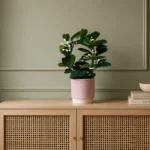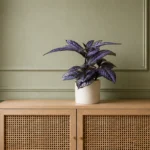
Care guide
Calathea
Goeppertia spp. / Calathea spp.
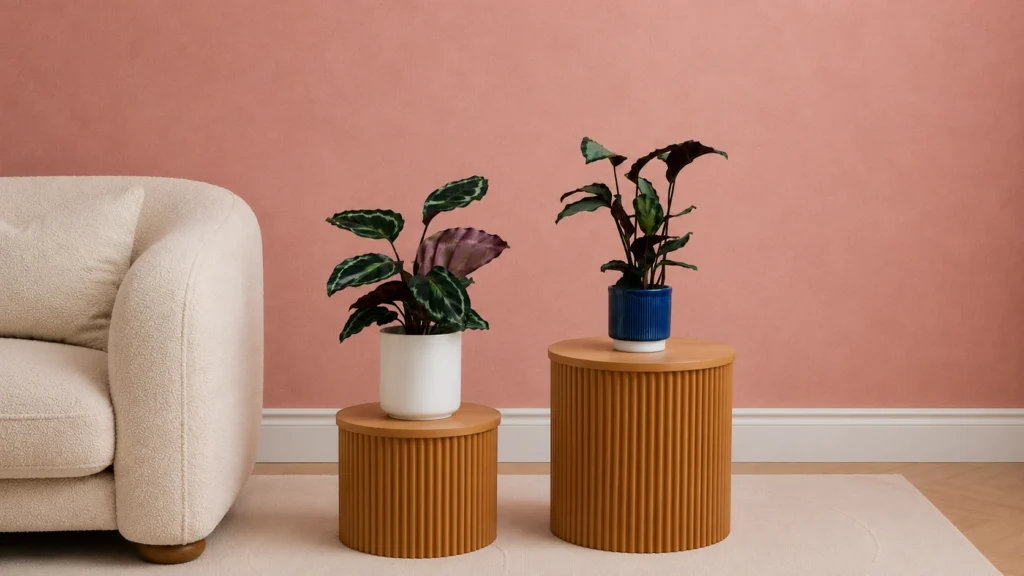
Extravagantly patterned leaves that rise and fall with the light — plants that are visibly alive and worth their few extra demands. This guide covers the common Goeppertia and related houseplants sold as Calathea; Maranta and Ctenanthe have their own guides.
At a glance
tap for detail ↓Just arrived?
Welcome home! A little settling-in is completely normal — here’s what to know in week one.
- Drooping or leaf drop can have several causes. Check the compost, drainage and growing conditions rather than assuming it is only travel stress.
- Keep a healthy plant in its nursery pot while it settles. If it keeps wilting, the compost stays waterlogged or roots look damaged, check the cause rather than waiting a fixed number of weeks.
- Follow the watering advice for this plant below. Check the compost first and let excess water drain before returning the nursery pot to its cover.
Light
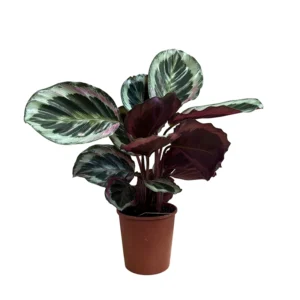
Bright shade, always — Calatheas live on the rainforest floor and direct sun bleaches those patterns fast. An east or north aspect, or well back from a brighter window, keeps Medallion, Greenstar and Leopard Plant at their boldest.
Watering
Keep the compost lightly, consistently moist — check twice a week and water when the surface has just dried. Calatheas are fussy about tap water; rainwater or filtered water prevents most brown-tip complaints.
The dipstick check
Slide a wooden stick or skewer a few centimetres into the soil.
Pull it out and look: damp soil clinging on means hold off.
Use the watering advice for this plant to decide whether it is ready for a drink. When you water, let the excess drain.
Humidity & temperature
Higher humidity strongly reduces crisp edges, especially in centrally heated rooms. A bathroom or kitchen is ideal, although many plants adapt to ordinary room humidity when watering is consistent. Keep them above 16°C and away from radiators and draughts.
Feeding
A half-strength balanced feed monthly through spring and summer is plenty — Calatheas burn easily on strong fertiliser.
Repotting & size
Repot every couple of years in spring into a light, moisture-retentive peat-free mix, only one size up. Division at repotting time is the easiest way to make more.
Something wrong?
Most problems are fixable — find the symptom below.
Brown, crispy edges
Cause
The classic Calathea complaint — dry air or tap water minerals.
Fix
Switch to rainwater or filtered water and raise the humidity. Existing damage won’t reverse; new leaves will tell you if you’ve fixed it.
Leaves curling into tubes
Cause
Dry compost or low humidity are possible causes. Check the growing conditions before choosing a remedy.
Fix
Check the compost before watering. If it is dry, water and let excess drain; if already wet, check drainage instead of adding more. Review humidity, warmth and position. Persistent curling needs further investigation rather than repeated watering or a promise of recovery within a day.
Patterns fading
Cause
Too much light.
Fix
Move it into gentler light; the contrast returns on new growth.
Leaves not moving day to night
Cause
Very low light, or the plant is stressed.
Fix
The day-night dance is a health signal — improve light and consistency of care and it resumes.
Yellowing leaves
Cause
Overwatering.
Fix
Just-moist means just — let the surface dry before each watering and check drainage.
Spider mites
Cause
Fine webbing and pale speckling can indicate spider mites. Inspect the leaf undersides to confirm.
Fix
Separate the plant and inspect nearby plants. Gently rinse leaf undersides and monitor for mites. Higher humidity alone will not clear them. If further treatment is needed, use a product labelled for spider mites on indoor ornamental plants and follow its application and repeat-treatment instructions.
Meet the plant
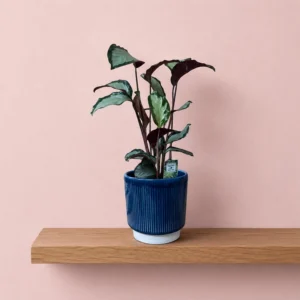
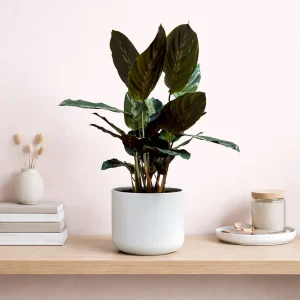
Peacock Plant
- The prayer plant group sold as calatheas is generally regarded as pet-safe — a rare and welcome trait among statement foliage plants.
- The leaves fold up each night like hands in prayer, a rhythm called nyctinasty — you can genuinely watch it happen at dusk.
- Botanists have reclassified many plants sold as Calathea into Goeppertia, but the trade - and most plant shelves - still say Calathea.
Shop this plant
Seasonal care tips, four times a year
What to change as the light changes — no spam, ever.
The sign-up form is not available right now. Browse our care guides for plant advice without signing up.