Care guide
Dragon Tree
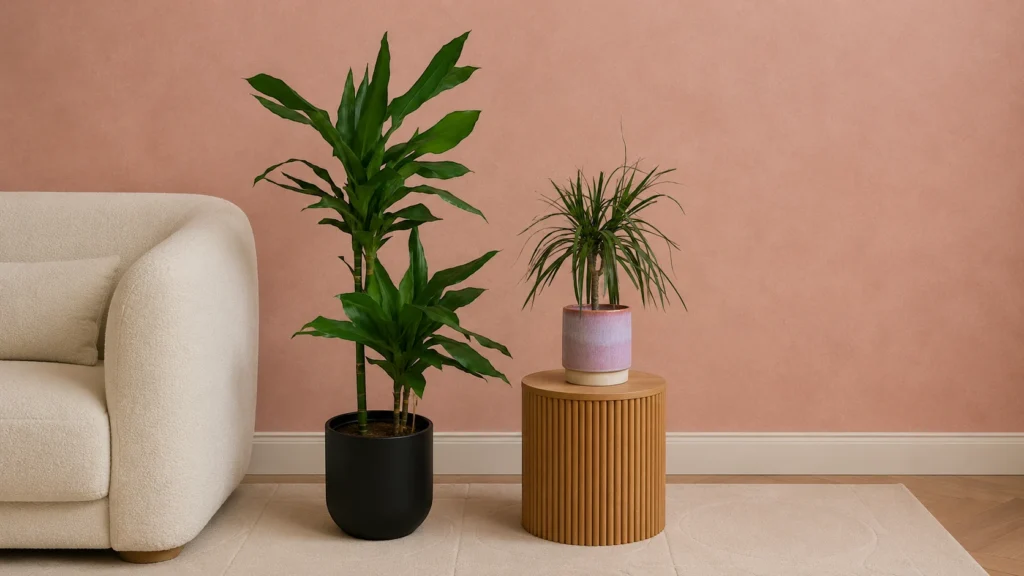
Dracaena reflexa var. angustifolia / Dracaena marginata
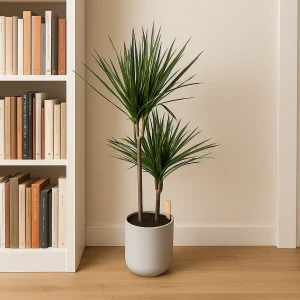
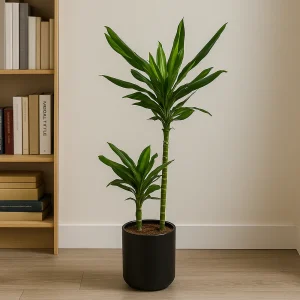
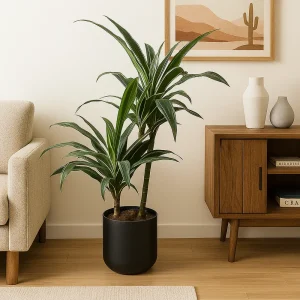
Slim canes topped with fountains of narrow red-edged leaves — palm-like drama that forgives shade, drought and forgetfulness.
At a glance
tap for detail ↓Just arrived?
Welcome home! A little settling-in is completely normal — here’s what to know in week one.
- Drooping or leaf drop can have several causes. Check the compost, drainage and growing conditions rather than assuming it is only travel stress.
- Keep a healthy plant in its nursery pot while it settles. If it keeps wilting, the compost stays waterlogged or roots look damaged, check the cause rather than waiting a fixed number of weeks.
- Follow the watering advice for this plant below. Check the compost first and let excess water drain before returning the nursery pot to its cover.
Light
Bright, indirect light keeps the red leaf margins vivid, but the dragon tree is famously tolerant and will keep growing (more slowly, more greenly) in shadier corners. Avoid harsh direct summer sun.
Watering
Check fortnightly and water when the compost has dried a good way down — the canes store moisture and overwatering is the main way these plants fail. Like spider plants, they’re sensitive to fluoride, so rainwater helps if tips brown.
The dipstick check
Slide a wooden stick or skewer a few centimetres into the soil.
Pull it out and look: damp soil clinging on means hold off.
Use the watering advice for this plant to decide whether it is ready for a drink. When you water, let the excess drain.
Humidity & temperature
Ordinary rooms suit it fine; keep it above 15°C and out of icy draughts.
Feeding
Monthly balanced feed through the growing season, nothing in winter.
Repotting & size
Slow-growing roots need repotting only every two to three years, one size up in free-draining peat-free mix. Too tall? You can cut a cane at any height — it re-sprouts below the cut, and the top can be rooted as a new plant.
Something wrong?
Most problems are fixable — find the symptom below.
Brown leaf tips
Cause
Fluoride in tap water, or dry air.
Fix
Switch to rainwater and trim the tips — cosmetic, and very common.
Yellow lower leaves dropping
Cause
Natural cane-forming habit — or overwatering if it’s many at once.
Fix
A few old leaves shedding is how the trunk grows; a cascade of yellow means dry it out.
Pale, bendy new growth
Cause
Too little light.
Fix
A brighter spot firms up new growth.
Sticky leaves with brown bumps
Cause
Scale insects.
Fix
Separate the plant and gently remove visible scale insects without scraping the leaf tissue. Wipe away sticky deposits with a damp cloth and monitor new growth. For persistent scale, use a treatment labelled for scale insects on indoor ornamental plants, following its application and repeat-treatment instructions.
Cane going soft
Cause
Rot from waterlogging.
Fix
Dry it out; if soft spreads, cut back to firm tissue — dragon trees re-shoot readily.
Whole plant leaning
Cause
Reaching for light.
Fix
Rotate weekly, and don’t be afraid to prune for shape in spring.
Meet the plant
Dracaena
- The family’s famous relative is the Canary Islands dragon tree, whose red resin was sold for centuries as ‘dragon’s blood’.
- Cut a cane anywhere and it re-sprouts — the branched, characterful shapes in shops are all made with secateurs.
- Dragon trees are tough, adaptable dracaenas — and long-time favourites for bright and low-light corners alike. Note dracaenas are toxic to cats and dogs if eaten.
Seasonal care tips, four times a year
What to change as the light changes — no spam, ever.
The sign-up form is not available right now. Browse our care guides for plant advice without signing up.