Care guide
Persian Shield
Strobilanthes dyeriana
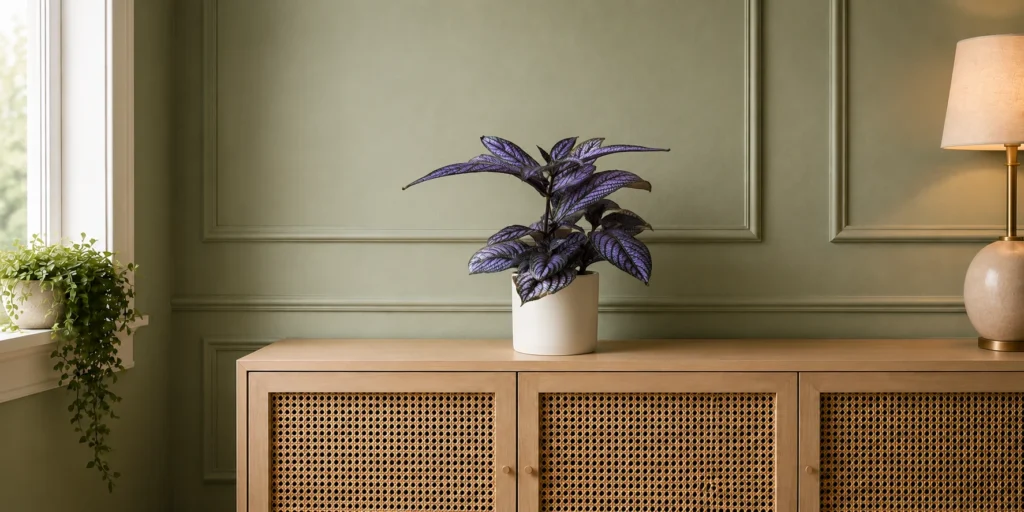
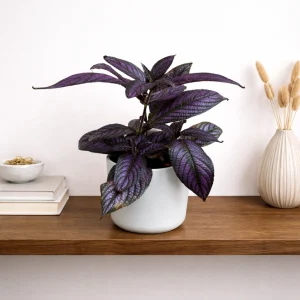
Leaves brushed with metallic purple and silver that genuinely shimmer — one of the very few houseplants with true iridescence.
At a glance
tap for detail ↓Just arrived?
Welcome home! A little settling-in is completely normal — here’s what to know in week one.
- Drooping or leaf drop can have several causes. Check the compost, drainage and growing conditions rather than assuming it is only travel stress.
- Keep a healthy plant in its nursery pot while it settles. If it keeps wilting, the compost stays waterlogged or roots look damaged, check the cause rather than waiting a fixed number of weeks.
- Follow the watering advice for this plant below. Check the compost first and let excess water drain before returning the nursery pot to its cover.
Light
Bright, indirect light fuels the purple shimmer — a little gentle morning sun deepens it, but harsh midday rays bleach the metallic sheen. In shade the purple fades to grey-green.
Watering
Keep the compost lightly moist through the growing season — check twice weekly in warm weather — and reduce in winter. It wilts theatrically when dry and recovers fast, but repeated droughts dull the colour.
The dipstick check
Slide a wooden stick or skewer a few centimetres into the soil.
Pull it out and look: damp soil clinging on means hold off.
Use the watering advice for this plant to decide whether it is ready for a drink. When you water, let the excess drain.
Humidity & temperature
It loves warmth and a bit of humidity — 18°C upwards, with a bathroom, kitchen or grouped-plants position keeping the foliage lush.
Feeding
Monthly balanced feed from April to September supports the vivid growth.
Repotting & size
It’s naturally a short-lived, fast plant — pinch tips regularly to keep it bushy, pot up in spring if roots fill the pot, and take a few cuttings each summer as insurance: they root easily in water and refresh the display when the parent tires.
Something wrong?
Most problems are fixable — find the symptom below.
Purple fading
Cause
Too little light — or too much harsh sun.
Fix
Bright and indirect is the sweet spot; adjust and new leaves recover the shimmer.
Dramatic wilting
Cause
Dry compost is one possibility; excess water and poor drainage can also cause wilting.
Fix
Check the compost before adding water. If dry, water and let it drain. If already wet, empty standing water from the cover pot and check drainage. Persistent wilting needs further investigation rather than repeated watering.
Leggy, sparse stems
Cause
Natural habit without pinching.
Fix
Pinch growing tips every few weeks; it responds with dense, colourful growth.
Crispy leaf edges
Cause
Dry air.
Fix
A more humid position keeps edges clean.
Dull leaves and fine webbing
Cause
Fine webbing and pale mottling can indicate spider mites. Inspect the undersides of the leaves to confirm.
Fix
Separate the affected plant from other houseplants and inspect them too. Gently rinse the foliage, including leaf undersides, and monitor for mites. Higher humidity alone will not clear an infestation. If treatment is needed, choose one labelled for spider mites on indoor ornamental plants and follow its directions, including repeat applications.
Plant tiring after a couple of years
Cause
Natural life cycle.
Fix
Root cuttings and start fresh — the young plants carry the best colour anyway.
Meet the plant
Strobilanthes
- Despite the common name, Persian shield is native to Myanmar, not Persia/Iran.
- Its metallic purple foliage is why it’s long been grown as a foliage showpiece.
- Growers often refresh it from cuttings: young plants usually carry the best colour and shape.
Shop this plant
Seasonal care tips, four times a year
What to change as the light changes — no spam, ever.
The sign-up form is not available right now. Browse our care guides for plant advice without signing up.