Care guide
Alocasia
Alocasia spp. and hybrids
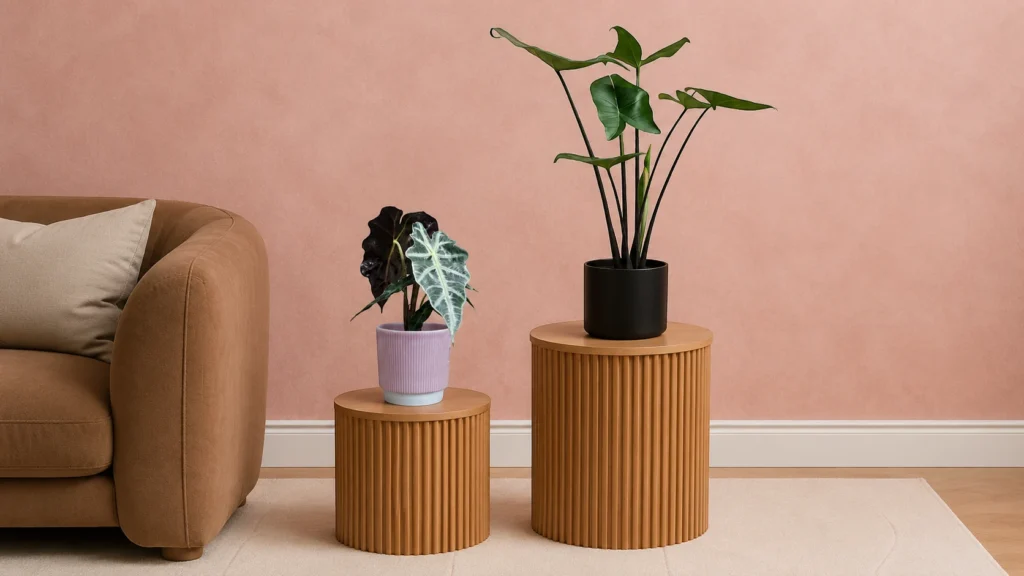
Dramatic arrow-, shield- or heart-shaped leaves on upright stems. This guide covers the Alocasia species and hybrids commonly grown indoors, from compact jewel types to much larger elephant ears.
At a glance
tap for detail ↓Just arrived?
Welcome home! A little settling-in is completely normal — here’s what to know in week one.
- Drooping or leaf drop can have several causes. Check the compost, drainage and growing conditions rather than assuming it is only travel stress.
- Keep a healthy plant in its nursery pot while it settles. If it keeps wilting, the compost stays waterlogged or roots look damaged, check the cause rather than waiting a fixed number of weeks.
- Follow the watering advice for this plant below. Check the compost first and let excess water drain before returning the nursery pot to its cover.
Light
Bright, indirect light suits most indoor Alocasias — near an east window or set back from a brighter one. Harsh direct sun can scorch the leaves, while deep shade weakens growth and reduces the colour and contrast of patterned varieties.
Watering
Most indoor Alocasias prefer compost that stays lightly and evenly moist while they are actively growing. Check often, water when the surface has just dried and always let excess drain. Reduce watering noticeably during cool, low-light periods or dormancy.
The dipstick check
Slide a wooden stick or skewer a few centimetres into the soil.
Pull it out and look: damp soil clinging on means hold off.
Use the watering advice for this plant to decide whether it is ready for a drink. When you water, let the excess drain.
Humidity & temperature
Alocasias generally appreciate high humidity and steady warmth. Bathrooms, kitchens or a grouped plant display can work well. Keep them around 18°C or warmer where possible, away from both cold draughts and drying radiators.
Feeding
Feed at half strength once a month through spring and summer while new leaves are forming. Pause when growth stops; strong or unused feed can scorch roots and build up in the compost.
Repotting & size
Repot in spring when roots and corms crowd the nursery pot, moving up only one size into a light, chunky peat-free mix. Species vary enormously in mature size. In a cool, low-light winter some may slow down, lose leaves or become dormant; keep them warm and only lightly moist while growth is paused.
Something wrong?
Most problems are fixable — find the symptom below.
Dropping a leaf as each new one opens
Cause
Normal-ish — many alocasias only sustain a few leaves at a time, especially when young.
Fix
Keep light and humidity generous and plants tend to hold more leaves as the corm matures.
Yellow leaves
Cause
Overwatering or cold.
Fix
Let the top of the compost dry before watering, and check it’s somewhere warm and draught-free.
Brown, crispy edges
Cause
Air too dry.
Fix
This is the humidity alarm — move it somewhere steamier or group it with other plants.
Drooping stems
Cause
Thirst, cold shock, or recent repotting stress.
Fix
Check the soil first; if moist and warm, give it time — Alocasias droop when annoyed and recover when settled.
Spider mites (fine webbing, speckled leaves)
Cause
Fine webbing and pale speckling can indicate spider mites. Inspect the leaf undersides to confirm.
Fix
Separate the plant and inspect nearby plants. Gently rinse leaf undersides and monitor for mites. Higher humidity alone will not clear them. If further treatment is needed, use a product labelled for spider mites on indoor ornamental plants and follow its application and repeat-treatment instructions.
Whole plant dying back in winter
Cause
Seasonal slowdown or dormancy, especially in cool, low-light conditions.
Fix
Keep the pot warm and only lightly moist. Some plants reshoot from the corm when warmth and light return, but check for rot if the corm is soft.
Meet the plant
Elephant Ear Plant
- Alocasia leaves are toxic to pets and people if chewed — the sap carries irritating calcium oxalate crystals.
- The genus ranges from compact, heavily patterned jewel Alocasias to elephant-ear species capable of leaves well over a metre long; mature size depends strongly on the species or hybrid.
- They grow from underground corms, which is why a ‘dead’ winter pot so often resurrects in spring.
Seasonal care tips, four times a year
What to change as the light changes — no spam, ever.
The sign-up form is not available right now. Browse our care guides for plant advice without signing up.