Care guide
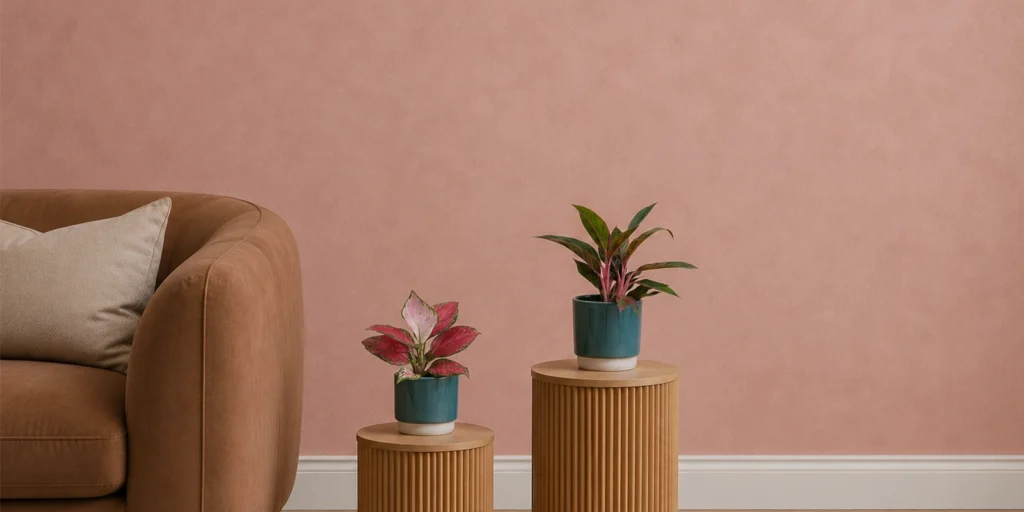
Chinese Evergreen
Aglaonema spp.
Painterly foliage in creams, pinks and greens on a plant that shrugs off low light and the occasional missed watering — colour without the fuss.
At a glance
tap for detail ↓Just arrived?
Welcome home! A little settling-in is completely normal — here’s what to know in week one.
- Drooping or leaf drop can have several causes. Check the compost, drainage and growing conditions rather than assuming it is only travel stress.
- Keep a healthy plant in its nursery pot while it settles. If it keeps wilting, the compost stays waterlogged or roots look damaged, check the cause rather than waiting a fixed number of weeks.
- Follow the watering advice for this plant below. Check the compost first and let excess water drain before returning the nursery pot to its cover.
Light
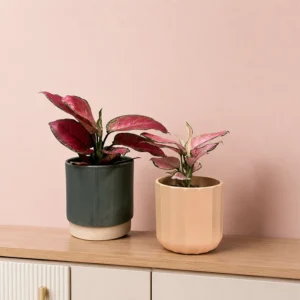
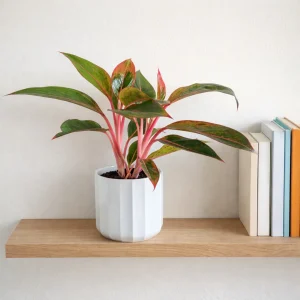
One of the best plants for less-bright rooms. Bright shade keeps the leaf patterns vivid — the paler and pinker the variety (like Cherry Baby and Light Pink Star), the more light it wants, though never direct sun.
Watering
Check weekly and water when the top few centimetres have dried, then let it drain. Aglaonemas are forgiving of the odd missed watering but not of sitting wet.
The dipstick check
Slide a wooden stick or skewer a few centimetres into the soil.
Pull it out and look: damp soil clinging on means hold off.
Use the watering advice for this plant to decide whether it is ready for a drink. When you water, let the excess drain.
Humidity & temperature
Ordinary room humidity is fine. What it really minds is cold — keep it above 16°C, away from draughty doors and single-glazed winter windowsills, and it will grow steadily all year.
Feeding
A monthly balanced feed from April to September is ample; it’s a slow, steady grower rather than a sprinter.
Repotting & size
Slow roots mean infrequent repotting — every two to three years, one size up, in a standard free-draining peat-free mix. It positively likes being a little snug.
Something wrong?
Most problems are fixable — find the symptom below.
Colours fading to plain green
Cause
Not enough light for the variegation.
Fix
Move it somewhere brighter (still no direct sun) — new leaves will come through with the pinks and creams restored.
Yellowing lower leaves
Cause
Overwatering, or just natural turnover of old leaves.
Fix
Let the compost dry further between drinks; the occasional yellow lower leaf on an otherwise happy plant is nothing to worry about.
Brown, greasy-looking patches
Cause
Cold damage.
Fix
Move it away from draughts and cold glass — damaged leaves won’t recover, but new growth will be clean.
Brown crispy tips
Cause
Dry air or erratic watering.
Fix
More consistent soil checks; a slightly more humid spot helps.
Leggy, sparse stems
Cause
Low light over a long period.
Fix
Brighter position; you can also cut leggy stems back in spring and they’ll reshoot bushier.
Drooping all over
Cause
Usually thirst; occasionally cold.
Fix
Feel the compost — if dry, water thoroughly; if moist, check the temperature of the spot.
Meet the plant
Aglaonema
- Aglaonemas are often associated with good fortune and are popular, easy-going foliage plants.
- Modern colourful Aglaonema cultivars are the result of intensive ornamental breeding, especially in Asia; brighter pink and cream forms usually need brighter indirect light.
- It’s among the most shade-tolerant of patterned houseplants — colour where most colourful plants give up. Note it’s toxic to pets if chewed.
Shop this plant
Seasonal care tips, four times a year
What to change as the light changes — no spam, ever.
The sign-up form is not available right now. Browse our care guides for plant advice without signing up.