Care guide
Hoya
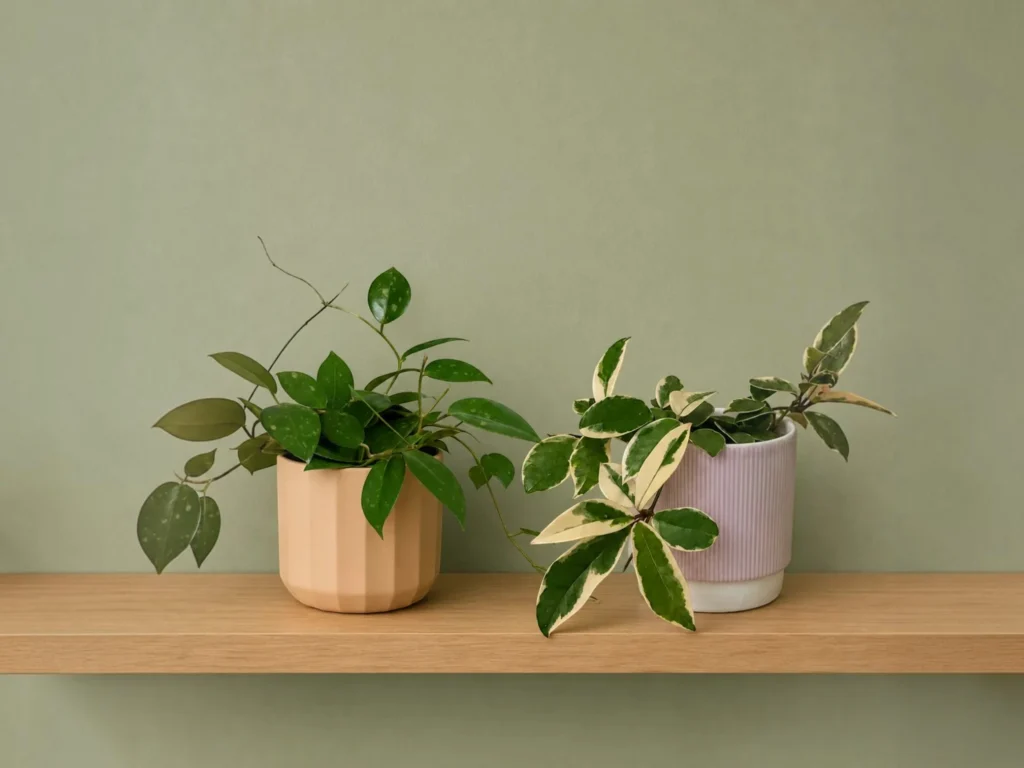
Hoya carnosa and similar thick-leaved Hoya spp.
Thick waxy leaves on slowly twining stems — plants people keep for decades, with scented porcelain-star flowers as the long-term reward. This guide covers Hoya carnosa cultivars and similar thick-leaved hoyas; finer-leaved species can need more regular moisture.
At a glance
tap for detail ↓Just arrived?
Welcome home! A little settling-in is completely normal — here’s what to know in week one.
- Drooping or leaf drop can have several causes. Check the compost, drainage and growing conditions rather than assuming it is only travel stress.
- Keep a healthy plant in its nursery pot while it settles. If it keeps wilting, the compost stays waterlogged or roots look damaged, check the cause rather than waiting a fixed number of weeks.
- Follow the watering advice for this plant below. Check the compost first and let excess water drain before returning the nursery pot to its cover.
Light
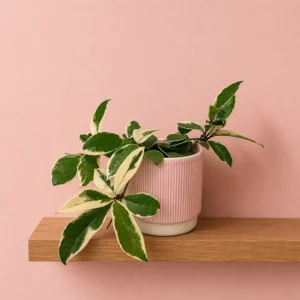
Bright, indirect light with a little gentle morning sun encourages compact growth and eventual flowering. Variegated Hoya carnosa cultivars need the brightest positions to keep their cream, yellow or pink colouring; deep shade produces greener growth and fewer blooms.
Watering
Thick-leaved hoyas store water, so let the compost dry well down before watering thoroughly. Check roughly fortnightly rather than following a fixed schedule. Finer-leaved Hoya species are less drought-tolerant and should be checked more often.
The dipstick check
Slide a wooden stick or skewer a few centimetres into the soil.
Pull it out and look: damp soil clinging on means hold off.
Use the watering advice for this plant to decide whether it is ready for a drink. When you water, let the excess drain.
Humidity & temperature
Ordinary room humidity suits Hoya carnosa and similar thick-leaved types, although higher humidity is a bonus. Keep them above 16°C and settled once they have found a good flowering position.
Feeding
Half-strength balanced feed monthly through spring and summer.
Repotting & size
Keep thick-leaved hoyas fairly snug and repot only when roots fill the nursery pot, using a very free-draining mix with added bark. Never cut off the leafless flower spurs: blooms can return from the same spurs year after year.
Something wrong?
Most problems are fixable — find the symptom below.
No flowers
Cause
Youth, low light, or over-generous repotting.
Fix
Patience plus bright light plus snug roots — hoyas often take a few years to first bloom, then repeat reliably.
Wrinkled leaves
Cause
Thirst — the stored water is used up.
Fix
Water thoroughly; leaves plump back up in days.
Yellowing, dropping leaves
Cause
Overwatering.
Fix
Dry it out properly between drinks — think fortnightly, not weekly.
Variegation fading
Cause
Not enough light for variegated types.
Fix
A brighter position with some gentle sun restores the colour on new growth.
Sticky droplets on leaves
Cause
Either natural nectar from flowering — or aphids.
Fix
Inspect new shoots and leaf undersides for insects. Droplets around flowers may be nectar, so identify the cause first. If aphids are present, separate the plant and gently rinse them off. For persistent pests, follow the instructions on a treatment labelled for aphids on indoor ornamental plants.
Bare lower stems
Cause
Natural with age.
Fix
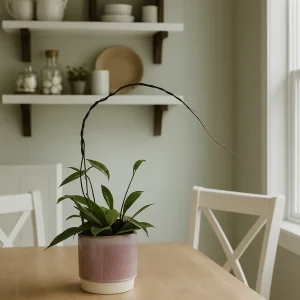
Loop long stems back over the pot — they leaf up where light hits them.
Meet the plant
Wax Plant
- Hoya flowers look almost artificial — geometric clusters of porcelain stars, most sweetly scented in the evening.
- Hoyas are often long-lived and can stay with you for many years — a genuine heirloom houseplant.
- Hoyas flower from persistent little spurs, so never tidy them off. The common wax plant, Hoya carnosa, is generally listed as non-toxic to cats and dogs.
Shop this plant
Seasonal care tips, four times a year
What to change as the light changes — no spam, ever.
The sign-up form is not available right now. Browse our care guides for plant advice without signing up.