Care guide
Never-Never Plant
Ctenanthe spp. and cultivars
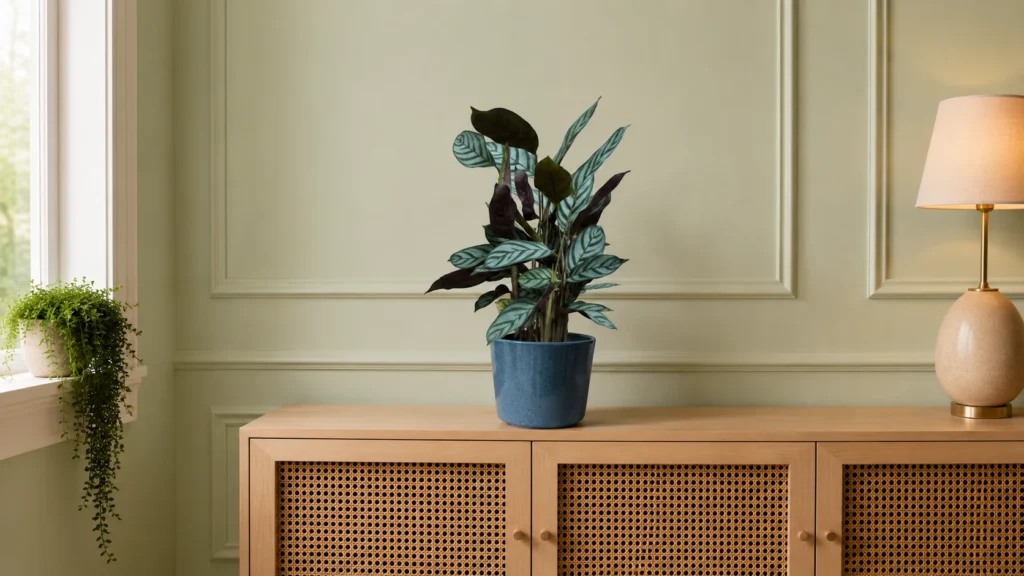
Fishbone, striped or silver-patterned leaves on a slightly more forgiving member of the prayer-plant family. This guide covers the Ctenanthe species and cultivars commonly sold as never-never plants.
At a glance
tap for detail ↓Just arrived?
Welcome home! A little settling-in is completely normal — here’s what to know in week one.
- Drooping or leaf drop can have several causes. Check the compost, drainage and growing conditions rather than assuming it is only travel stress.
- Keep a healthy plant in its nursery pot while it settles. If it keeps wilting, the compost stays waterlogged or roots look damaged, check the cause rather than waiting a fixed number of weeks.
- Follow the watering advice for this plant below. Check the compost first and let excess water drain before returning the nursery pot to its cover.
Light
Bright shade or gentle indirect light — the fishbone pattern stays sharpest out of direct sun. It copes with slightly darker corners better than most patterned plants.
Watering
Keep the compost lightly moist, checking twice weekly in summer, and water when the surface has just dried. Soft water (rain or filtered) keeps the leaf edges clean.
The dipstick check
Slide a wooden stick or skewer a few centimetres into the soil.
Pull it out and look: damp soil clinging on means hold off.
Use the watering advice for this plant to decide whether it is ready for a drink. When you water, let the excess drain.
Humidity & temperature
It enjoys humidity but tolerates average rooms better than Calathea — a fine choice if your bathroom windowsill is already full. Keep it above 16°C and out of draughts.
Feeding
Half-strength balanced feed monthly through the growing season.
Repotting & size
Repot every two to three years in spring, one size up, in light peat-free mix. Clumps divide easily at repotting if you want to share it.
Something wrong?
Most problems are fixable — find the symptom below.
Brown crispy edges
Cause
Dry air or hard tap water.
Fix
Softer water and a touch more humidity — the standard prayer-family fix.
Leaves folding tightly and staying folded
Cause
Thirst or stress.
Fix
Check the compost; consistent just-moist care relaxes it.
Pattern washing out
Cause
Too much light.
Fix
Move into gentler shade; new growth recovers the contrast.
Yellow lower leaves
Cause
Overwatering or natural ageing.
Fix
Let the surface dry before watering; the odd old leaf yellowing is normal.
Leggy growth
Cause
Low light.
Fix
Brighter shade and a spring trim keep it compact.
Spider mites
Cause
Fine webbing and pale speckling can indicate spider mites. Inspect the leaf undersides to confirm.
Fix
Separate the plant and inspect nearby plants. Gently rinse leaf undersides and monitor for mites. Higher humidity alone will not clear them. If further treatment is needed, use a product labelled for spider mites on indoor ornamental plants and follow its application and repeat-treatment instructions.
Meet the plant
Ctenanthe
- Commonly treated as a pet-friendly prayer-plant relative; still discourage chewing, as any plant can cause stomach upset.
- Many Ctenanthe combine pale or fishbone-patterned upper leaves with deep purple undersides, which become especially visible as the foliage rises each evening.
- Each evening the leaves lift and fold — stand it somewhere you’ll notice, because half its charm happens at dusk.
Seasonal care tips, four times a year
What to change as the light changes — no spam, ever.
The sign-up form is not available right now. Browse our care guides for plant advice without signing up.