Care guide
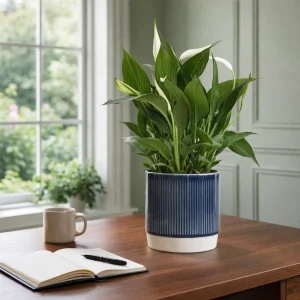
Peace Lily
Spathiphyllum spp. and hybrids
Elegant white blooms, glossy leaves, and absolutely no shame about wilting theatrically the moment they are thirsty — then bouncing straight back. This guide covers the commonly grown Spathiphyllum species and hybrids sold as peace lilies.
At a glance
tap for detail ↓Just arrived?
Welcome home! A little settling-in is completely normal — here’s what to know in week one.
- Drooping or leaf drop can have several causes. Check the compost, drainage and growing conditions rather than assuming it is only travel stress.
- Keep a healthy plant in its nursery pot while it settles. If it keeps wilting, the compost stays waterlogged or roots look damaged, check the cause rather than waiting a fixed number of weeks.
- Follow the watering advice for this plant below. Check the compost first and let excess water drain before returning the nursery pot to its cover.
Light
One of the better flowering houseplants for indirect or lower-light positions — it flowers best in bright, indirect light but stays handsome in shade. Keep it out of direct sun, which yellows and scorches the leaves.
Watering
Keep the compost lightly moist, with good drainage. Check it regularly and water when the surface has dried, then let excess water drain away. If the plant wilts, check the compost before watering: dry compost may need a drink, but wet compost calls for a drainage check, not more water.
The dipstick check
Slide a wooden stick or skewer a few centimetres into the soil.
Pull it out and look: damp soil clinging on means hold off.
Use the watering advice for this plant to decide whether it is ready for a drink. When you water, let the excess drain.
Humidity & temperature
It’s a tropical understorey plant, so it appreciates a bit of humidity — bathrooms and kitchens are happy homes. Keep it above 16°C and away from cold draughts, which stop it flowering.
Feeding
Feed monthly from April to September with a balanced houseplant feed at half strength — peace lilies are light feeders and overdoing it browns the leaf tips.
Repotting & size
Repot in spring when roots densely fill the nursery pot or watering becomes difficult, going up just one size. Peace lilies tolerate being slightly snug, but do not need to be rootbound to flower. A standard peat-free houseplant mix is ideal.
Something wrong?
Most problems are fixable — find the symptom below.
Whole plant wilting
Cause
Dry compost is one possibility; excess water and poor drainage can also cause wilting.
Fix
Check the compost a little below the surface. If dry, water thoroughly and allow it to drain. If wet, hold off watering, empty any water in the cover pot and check the drainage. If wilting continues, investigate the roots and growing conditions.
No flowers
Cause
Not enough light, or the plant is between flowering flushes.
Fix
Move it somewhere brighter (still out of direct sun) and be patient — flowers come in waves, mainly spring and summer.
Brown leaf tips
Cause
Dry air, tap water minerals, or overfeeding.
Fix
Raise the humidity, try rainwater, and ease off the feed. Trim tips cosmetically if you like.
Yellow leaves
Cause
Overwatering or old age of individual leaves.
Fix
Check the soil isn’t staying soggy; the odd yellow leaf on a healthy plant is just natural turnover.
Green flowers
Cause
Too much feed or the bloom is simply ageing.
Fix
Flowers naturally green as they age — snip spent ones at the base. Reduce feeding if new blooms open green.
Black-edged leaves
Cause
Cold damage from a draught or a chilly windowsill.
Fix
Move it somewhere steadier and above 16°C — new growth will come through clean.
Meet the plant
Spathiphyllum
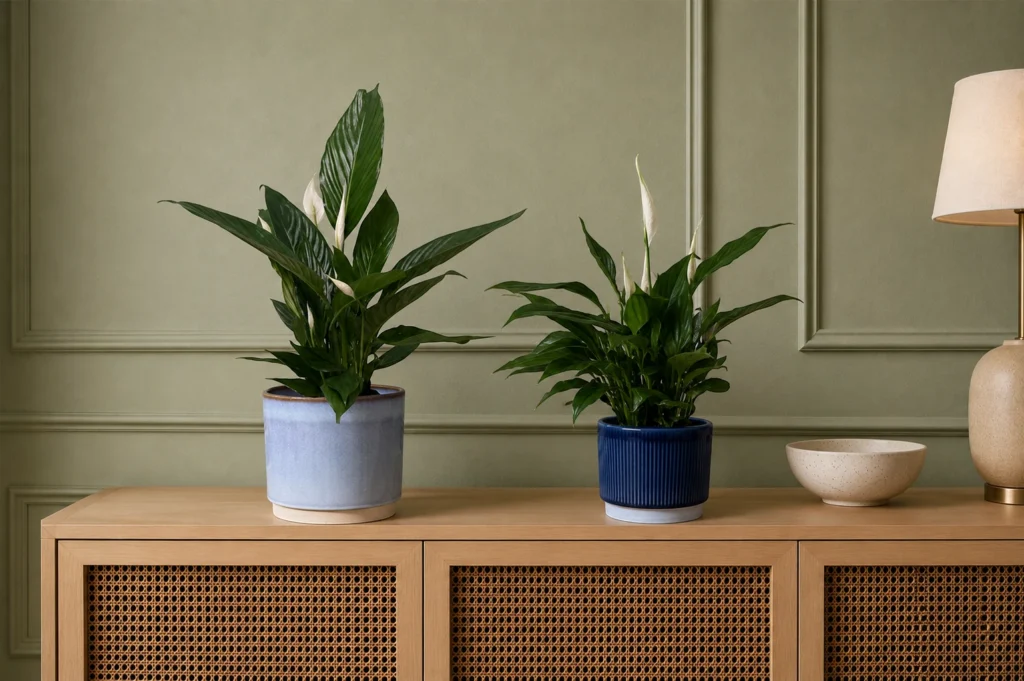
- The white ‘petal’ isn’t a flower at all — it’s a modified leaf called a spathe sheltering the true flower spike.
- It’s one of the few houseplants that flowers happily in lower light.
- Its wilt-and-recover habit makes it a great communicator - though the leaves contain irritating calcium oxalate crystals and should be kept away from pets.
Shop this plant
Seasonal care tips, four times a year
What to change as the light changes — no spam, ever.
The sign-up form is not available right now. Browse our care guides for plant advice without signing up.