Care guide
Rubber Plant
Ficus elastica
Bold, sculptural, and gratifyingly fast-growing — big polished leaves that make a statement without demanding much in return.
At a glance
tap for detail ↓Just arrived?
Welcome home! A little settling-in is completely normal — here’s what to know in week one.
- Drooping or leaf drop can have several causes. Check the compost, drainage and growing conditions rather than assuming it is only travel stress.
- Keep a healthy plant in its nursery pot while it settles. If it keeps wilting, the compost stays waterlogged or roots look damaged, check the cause rather than waiting a fixed number of weeks.
- Follow the watering advice for this plant below. Check the compost first and let excess water drain before returning the nursery pot to its cover.
Light
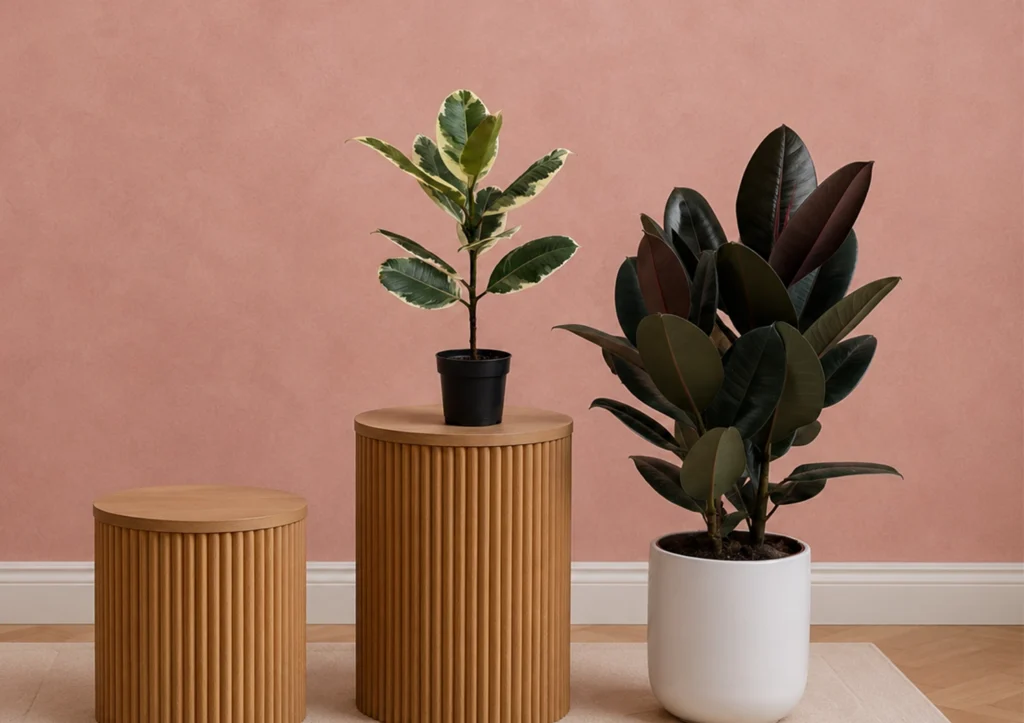
Bright, indirect light keeps a rubber plant compact and glossy — a metre or so back from a sunny window is perfect. Variegated types like the white rubber tree need the brighter end to hold their colour. Deep shade makes it leggy and dull.
Watering
Check weekly and water when the top few centimetres are dry, then let the excess drain fully. Rubber plants would always rather be a touch too dry than too wet — soggy compost is the quickest way to lose leaves.
The dipstick check
Slide a wooden stick or skewer a few centimetres into the soil.
Pull it out and look: damp soil clinging on means hold off.
Use the watering advice for this plant to decide whether it is ready for a drink. When you water, let the excess drain.
Humidity & temperature
Ordinary room humidity is fine. Keep it between 16–27°C, out of cold draughts, and away from radiators, which crisp the leaf edges. It dislikes being moved around — find a spot and let it settle.
Feeding
A monthly feed with balanced houseplant food from April to September supports those big leaves. Nothing over winter.
Repotting & size
Repot every two to three years in spring when roots circle the nursery pot, one size up in a free-draining peat-free mix. Wipe the leaves monthly — dust genuinely slows this plant down.
Something wrong?
Most problems are fixable — find the symptom below.
Dropping leaves
Cause
Shock from a move, a cold draught, or sudden overwatering.
Fix
Rubber plants sulk after change. Settle it in a stable, bright spot, water only when the top is dry, and it will re-leaf.
Yellowing lower leaves
Cause
Overwatering.
Fix
Let the compost dry out further between drinks and confirm the pot drains freely.
Dull, dusty leaves
Cause
Exactly that — dust blocking the light.
Fix
Wipe with a damp cloth monthly; the shine is the plant’s own, no leaf-shine needed (though a mist and buff brings it up beautifully).
Brown, crispy patches
Cause
Sunburn through glass or radiator heat.
Fix
Move it out of the direct beam and away from heat sources; damaged leaves won’t heal but new growth will be clean.
Leggy, stretched growth
Cause
Too little light.
Fix
Brighter position, and pinch out the top in spring to encourage branching.
White sap when cut
Cause
Completely normal — it’s the latex the plant is named for.
Fix
Wear gloves when pruning as the sap can irritate skin, and keep it off pets.
Meet the plant
Ficus
- Rubber plant sap contains latex and the species was tapped historically — though modern natural rubber mainly comes from a different tree, Hevea brasiliensis.
- In parts of north-east India, aerial roots of Ficus elastica have been trained over generations into living root bridges.
- Wiping the leaves keeps them clean and glossy — and heavy dust can reduce how well a plant photosynthesises. Its milky sap can irritate skin and is mildly toxic to pets.
Seasonal care tips, four times a year
What to change as the light changes — no spam, ever.
The sign-up form is not available right now. Browse our care guides for plant advice without signing up.