Care guide
Yucca
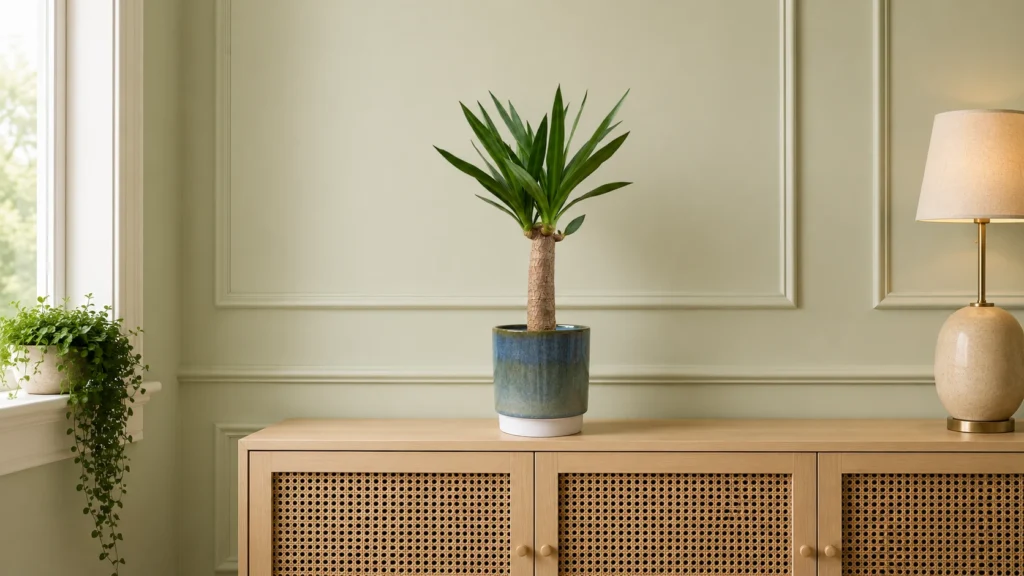
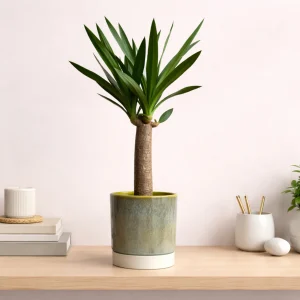
Yucca gigantea / Yucca elephantipes
Architectural swords on a sturdy trunk — a statement plant that thrives on sunshine, neglect, and very little else.
At a glance
tap for detail ↓Just arrived?
Welcome home! A little settling-in is completely normal — here’s what to know in week one.
- Drooping or leaf drop can have several causes. Check the compost, drainage and growing conditions rather than assuming it is only travel stress.
- Keep a healthy plant in its nursery pot while it settles. If it keeps wilting, the compost stays waterlogged or roots look damaged, check the cause rather than waiting a fixed number of weeks.
- Follow the watering advice for this plant below. Check the compost first and let excess water drain before returning the nursery pot to its cover.
Light
Give it your sunniest spot — a south-facing window is what a yucca dreams of. It tolerates less, but growth slows and the leaves lean hard towards the light.
Watering
Drought-tolerant to its core: check fortnightly, water only when the compost is dry well down, and halve even that in winter. Yuccas are lost to kindness far more often than neglect.
The dipstick check
Slide a wooden stick or skewer a few centimetres into the soil.
Pull it out and look: damp soil clinging on means hold off.
Use the watering advice for this plant to decide whether it is ready for a drink. When you water, let the excess drain.
Humidity & temperature
Dry air is no problem at all — this is one for the centrally-heated living room. Happy from 10–30°C.
Feeding
A cacti and succulent feed twice a year — once in spring, once in midsummer — is genuinely all it needs.
Repotting & size
Slow roots and a heavy trunk mean repotting is rare — every three years or so, into a heavy pot (for ballast) with gritty, free-draining cacti mix. The trunk stores water; treat it like the desert plant it is.
Something wrong?
Most problems are fixable — find the symptom below.
Yellowing, drooping leaves
Cause
Overwatering — the only common way to upset a yucca.
Fix
Stop watering, let it dry completely, and resume with a much lighter hand.
Brown tips
Cause
Dry air is rarely the culprit here — usually salt or feed build-up.
Fix
Flush the pot through with plain water and trim tips cosmetically.
Leaning trunk
Cause
Growing towards the light.
Fix
Rotate the pot regularly, and give it more sun if the lean is dramatic.
Pale, stretched new growth
Cause
Not enough light.
Fix
There’s no substitute — move it somewhere sunnier.
Soft trunk base
Cause
Rot from persistent wet compost.
Fix
Serious: let it dry out fully and repot into dry gritty mix; healthy upper sections can be re-rooted if the base is lost.
Old lower leaves browning and dropping
Cause
Completely natural — that’s how the trunk forms.
Fix
Peel or trim them away; the fresh crown above is what matters.
Meet the plant
Spineless Yucca
- The 'spineless' name is relative: compared with many hardy yuccas its leaves lack needle-sharp terminal spines, but the tips are still firm and worth placing away from traffic.
- In Central America it can become an 8-12 metre tree; the old name Y. elephantipes refers to the elephant-foot base it develops.
- The trunk stores water, which helps it cope with dry spells. Note yucca is harmful to pets if eaten.
Shop this plant
Seasonal care tips, four times a year
What to change as the light changes — no spam, ever.
The sign-up form is not available right now. Browse our care guides for plant advice without signing up.